Dangerous Australian wildlife
More of those animals you better avoid
Do you think I should stop talking about the dangerous Australian wildlife? Nah, you want to be prepared, right?
On the other page I told you about the most dangerous Australian animals that live in the coastal areas of the tropical north. Now we move further into the inland. Fascinating animals are waiting for you - nasties and cuties.
Is it fair to call animals "nasties" at all? Well, there are quite a few that don't look particular nice, and don't invite to be cuddled.
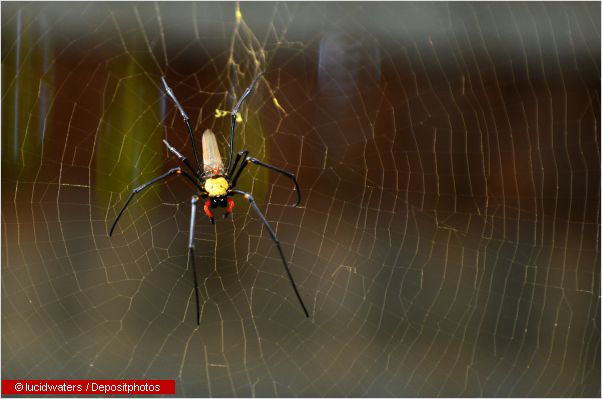
Many people think of spiders and snakes as the most dangerous and nasty animals in Australia.
In my opinion, snakes and spiders are not nasty. They are wonderful animals. Though, I wouldn't touch them either. Know what is crawling out there, and there's no need to fear Australian wildlife.
Australian Spiders
when I was there last night,
I didn't see him in the dark,
but boy, I felt his bite."
Here we go! Get to know the most notorius Australian spiders!
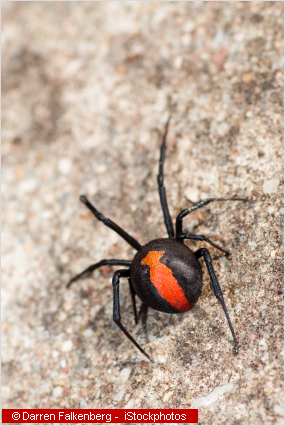
Redback Spider - Latrodectus hasseltii
The redback spider is a member of the black widow family, and bites are very painful for a few days. Antivenom is available so there were no deaths to report since 1956. Only the female redbacks bite.
Redbacks can be found all over Australia, in the cities and the Outback. They like dry and dark places in houses, sheds, outdoor toilets etc. About half of the bites occur indoors. Don't panic if you see a spider, they won't attack you.
Capital Cities
Accommodation
Special Interests
- General Facts
- Australian States
- Photo Gallery
- Climate & Bushfires
- Australian Wildlife
- Australian Opal
Rent A Campervan
Tips to prevent redback spider bites, and other insect bites as well:
- When you're afraid that your accommodation place is spider infected, cover your boots at night, and shake your clothes in the morning before you get dressed. Keep your bags and suitcases closed.
- Be careful when you handle stuff in dark corners in your shed.
- Always wear gloves when you collect firewood, move rocks and wood.
How to treat redback spider bites:
Apply ice packs to relieve the pain that starts immediately after the bite. Antivenom is only given if the pain consists for several days, or if the victim develops systemic effects such as nausea, vomiting, and headache.
Even if you arrive at a hospital days after the bite, the antivenom will be effective to relieve the symptoms. So there is no need to panic.
Sydney Funnel Web - Atrax robustus
The Sydney Funnel web spider is far more dangerous than the redback. As the name already tells you, this spider is found in the greater Sydney area. Due to the urbanization in this spider's habitat it is very rare.
The funnel web is a 6-7 cm big, black spider with massive fangs. The venom of the male spider is more toxic than the female.
First aid: The pressure immobilisation technique, which is also recommended for snake bites, must be commenced immediately. It prevents the spread of the venom, and gives the victim some time to arrive in hospital.
It is recommended that all bites by big black spiders are treated as suspected funnel web bites. You never know.
Other Spiders
Wolf spiders, mouse spiders and the white-tailed spiders are also species to be avoided.
Some Australian spider venoms cause severe skin destruction. Scientists admit that they don't know much about the substances causing the skin problems, so there's more research to be done.
Other venomous creatures
Apart from spiders, snakes definitely belong to the group of dangerous Australian wildlife. I've dedicated a separate page in the Outback Guide to Australian snakes, see link below.
- Caterpillars - the larvae of many moths and butterflies have spines or hairs that sting. Itching and pain result from contact with these creatures and should be treated with calamine lotion or other southing creams. If the pain doesn't stop, seek medical attention.
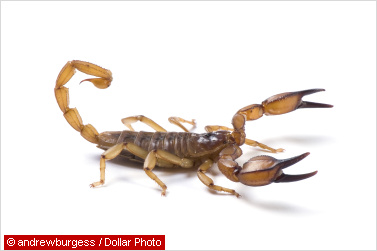
- Scorpions in different sizes are found all over Australia. Luckily, stingings are uncommon, and their venom is rather weak.
- Bites from centipedes, especially from the bigger species, can be painful. There is no special treatment other than using painkillers. It is important to disinfect the punctured area. Victims without anti-tetanus injections within the past ten years should see a doctor.
- Bees, wasps and ants you probably know from home. Their stings and bites can be very painful, as well. Apply an icepack on the site of bite. If you're allergic to bees or wasps, remove the sting by scraping. Apply pressure immobilisation bandage as for snake bite. See a doctor immediately.
Want to know how to apply that pressure immobilisation bandage correctly? See the instructions on the Australian Venom Research Unit.
Print it out and take it with you. You certainly won't need it, however, isn't it a good feeling to be prepared for anything? Also, refer to the First Aid Kit Checklist and take the necessary items with you.
Don't forget that even non-venomous Australian wildlife and cute animals can also hurt humans. Always treat wild animals with respect. You never know what they would do if you scare them.