Australian Climate
What is the weather like in Australia?
The Australian climate varies a lot depending on which state you are
going to visit. The question "What's the weather like at my Australian
holiday destination?" is important, right?
Although Australians always hope for rain in drought conditions, they
will certainly understand that you don't want rain when you are out
there :).
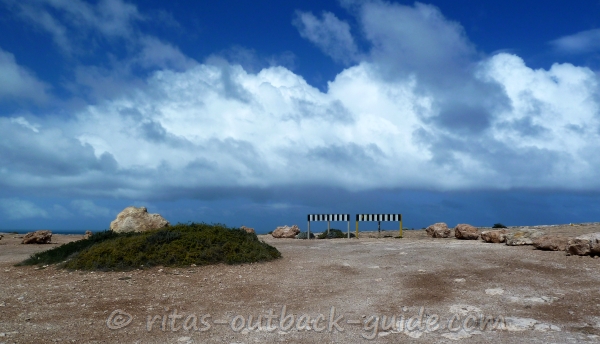
You can bet that the wind nearly blew us off the cliff! Nevertheless, I love windy days on the coast.
That's why I have researched information about the Australian weather and general climate facts for you.
Because Australia is such a big country, there will be always a region with pleasant weather at any time of the year.
However, I have to add a warning! Even in a mostly dry and sunny country like Australia, the weather is not 100% predictable.
Let me give you an example. My husband wanted to celebrate a special
birthday of his in Adelaide with family and friends. His birthday is in
late November which is spring in South Australia, so we expected at
least mild weather. A barbecue was planned, lo and behold, this certain
day had a maximum of 15°C, and a rather cold evening with 10°C.
The following year we were told that Adelaide had lovely 30°C on that day.
So, while climate charts and reports give you average weather conditions, collected over a long period of time, the actual weather can still be different on a certain day.
Climate in Australia - An overview about the seasons
This sequence of seasons is valid for all countries in the southern hemisphere.
- Summer is from December to February
- Autumn is from March to May
- Winter is from June to August, and finally,
- Spring is from September to November.
With Australia's vast dimensions, you can imagine that it is hard to pick a season that has ideal weather in each and every corner of the country. It often depends on the activities you're planning for your holiday trip.
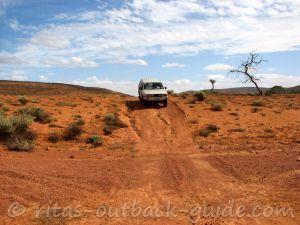
One fact is for certain, Australia's climate is much dryer than in any other country of the world. Rainfall is rather unpredictable in most parts of the continent, except for the northern regions which are under influence of the tropical monsoons.
Climate of the central desert regions
The central and southern parts of Western Australia, the southern
Northern Territory, the central and northern parts of South Australia,
as well as the far west of Queensland New South Wales belong to
Australia's dry and desert regions.
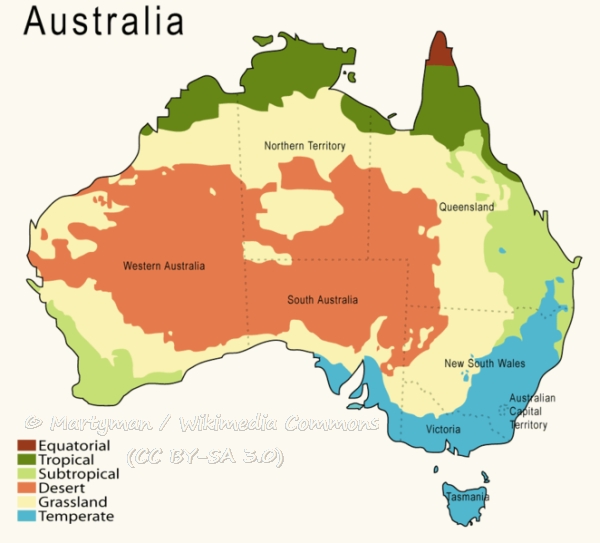 Australian climate classification
This map certainly gives you a better overview of the climate zones in Australia than my descriptions.
Anyway, the central parts of Australia have hot summers with
temperatures of 40°C and more during the day, while the average day time
temps in winter are around 20°C. At night temperatures vary from 20°C
in summer to freezing zero in winter. Clear blue skies and low humidity
make the hot days tolerable.
The arid and semi-arid areas of inland Australia receive between
100 and 300 mm rain per year, but this is rather unpredictable. The
northern parts get perhaps a little more rain, depending how far south
the monsoon clouds make their way. All in all, you'll never know when
the rain comes in these driest parts of Australia.
Climate in Australia - The tropical North
Regions north of the Tropic of Capricorn are known as the
tropics. Towns along the tropic are Rockhampton on the Queensland coast
and Alice Springs in central Australia. On the Western Australian coast
the marker is half way between Carnavon and Exmouth.
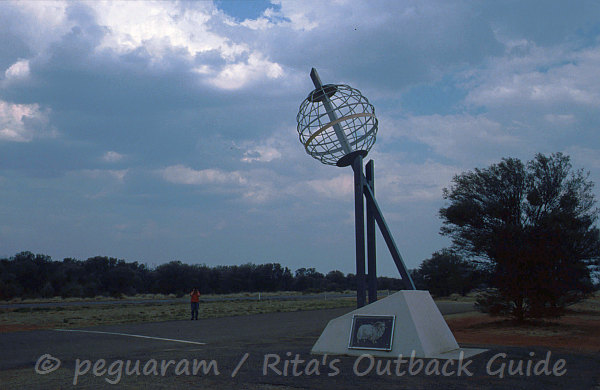 The Tropic of Capricorn about 35 km north of Alice Springs
The weather in Australia's tropics has two different seasons, the dry and the wet. The dry season
is from May to October in the Australian winter months. However, winter
in the tropics is not as cold as in the southern states. Average
temperatures during the day are in the low 20s, but the nights can be
rather cold.b
At the end of the dry season humidity builds up, it is getting hot and
sticky. It can take a few weeks until the first rain and thunderstorms
open the wet season.
It doesn't rain all day long during the wet, but the rainfall is usually
heavy and causes flooding. The wet is also the time when cyclones occur
along Australia's northern coastlines.
However, when the parched land finally gets some rain, it is amazing to
see the wildflowers emerge from the red sand. That's just awesome.
Australian climate - The temperate regions
Australia's temperate regions are in the south and south eastern parts of the continent. They include Tasmania and the coastal areas of New South Wales, Victoria and South Australia. The weather in the temperate regions has distinctive seasons.
Summers are warm with average temperatures around 30°C, and sometimes they have heat waves that can last for weeks.
Winters are not as cold as in most European countries. Apart from the mountainous areas of the southern Great Dividing Range,
you'll hardly ever see snow in the temperate regions. The snowfields in
New South Wales and Victoria receive regular snow in winter, and they
are considered bigger than those in Switzerland.
The weather in the temperate regions is rather changeable. A southerly
change with cold winds on the coastlines can make you shiver even in
summer.
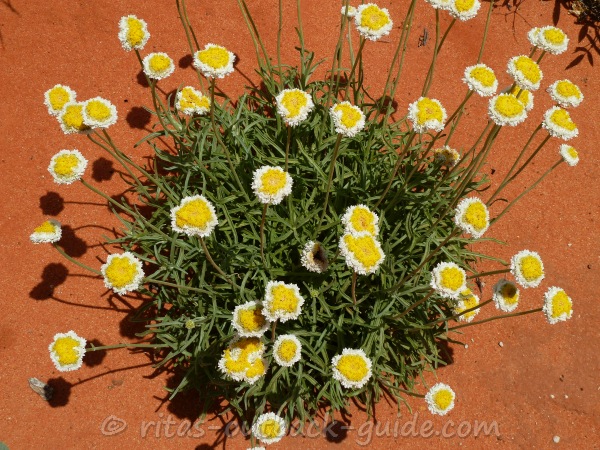 Poached-egg daisies on the Silver City Hwy
Bushfires
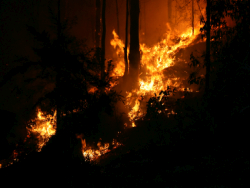
Australia's hot and dry climate contributes to huge bushfires. The danger for bush fires increases with low humidity, strong winds and high temperatures. Australian native plants, especially eucalyptus trees and bushes burn very easily in these dry conditions.
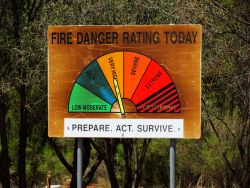
Please be very careful with any open fire, even your cigarettes on days of high fire danger. During the summer months most states have fire bans, that means you are not allowed to use you camping stove outside, let alone have a camp fire going. You'll get information about the state of fire danger from local newspapers and in the news. You'll also see these warning signs along the main highways. Please obey these rules, and don't be the fool who causes a bush fire.
There's a long history of severe bush fires in Australia. When the fires get out of control and threaten the capital cities, you'll certainly get to see the news around the world. In February 1983 more than 100 bush fires damaged more than one million hectares of bushland in South Australia and Victoria. 76 people died in the fires. This series of fires are known as the "Ash Wednesday", a sad event caused by the severe Australian climate conditions.
Read more about bushfires in Australia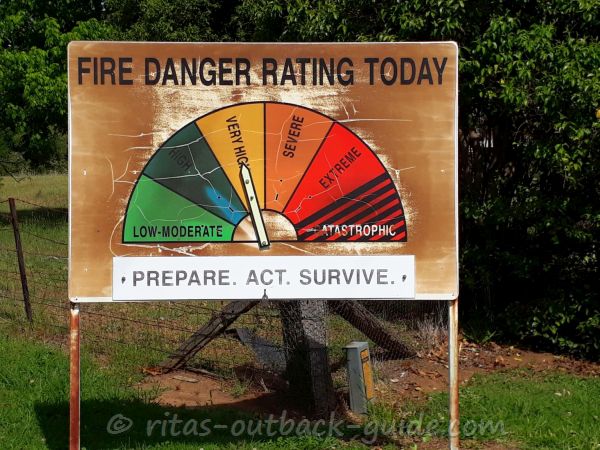 Be responsible on days with high fire risk
Check out more Australian Facts and Stories

- Home ›
- The climate in Australia
Travel Advice during Sars-CoV-2 Outbreak

Do you plan to travel to, or within Australia? Restrictions apply due to the Covid-19 pandemic.
Please click here for the latest travel advice from the Australian Government.
Don't miss these popular articles


Connect And Follow Our Tracks
Please join me at Facebook & Twitter


Legal Stuff
ALL RIGHTS RESERVED